Where we’re camping
A church camp on a pioneer creek, in a valley that a bishop from Centerville settled with his sons. Here’s the short version to tell around the fire.
The name
Zarahemla is the great city of the Book of Mormon — the capital of the Nephites for most of their history, named for the leader of the people who were already living there when Mosiah’s group arrived. Church camps across Utah borrow names from the book, and this one got the biggest.
There are actually two Camp Zarahemlas in northern Utah. Ours is the Morgan one, on East Canyon Creek. The other sits on the North Fork of the Ogden River above Pineview, in Liberty. People mix them up every year. Don’t be the family that drives to Liberty.
The camp
Camp Zarahemla belongs to the Church and was built for girls camp — generations of young women from this end of the state have spent a week here every summer. The lodge and the first buildings went up with local labor. One woman who still camps here wrote that her grandfather and her father both helped raise the lodge, and that she came here for girls camp herself as a teenager.
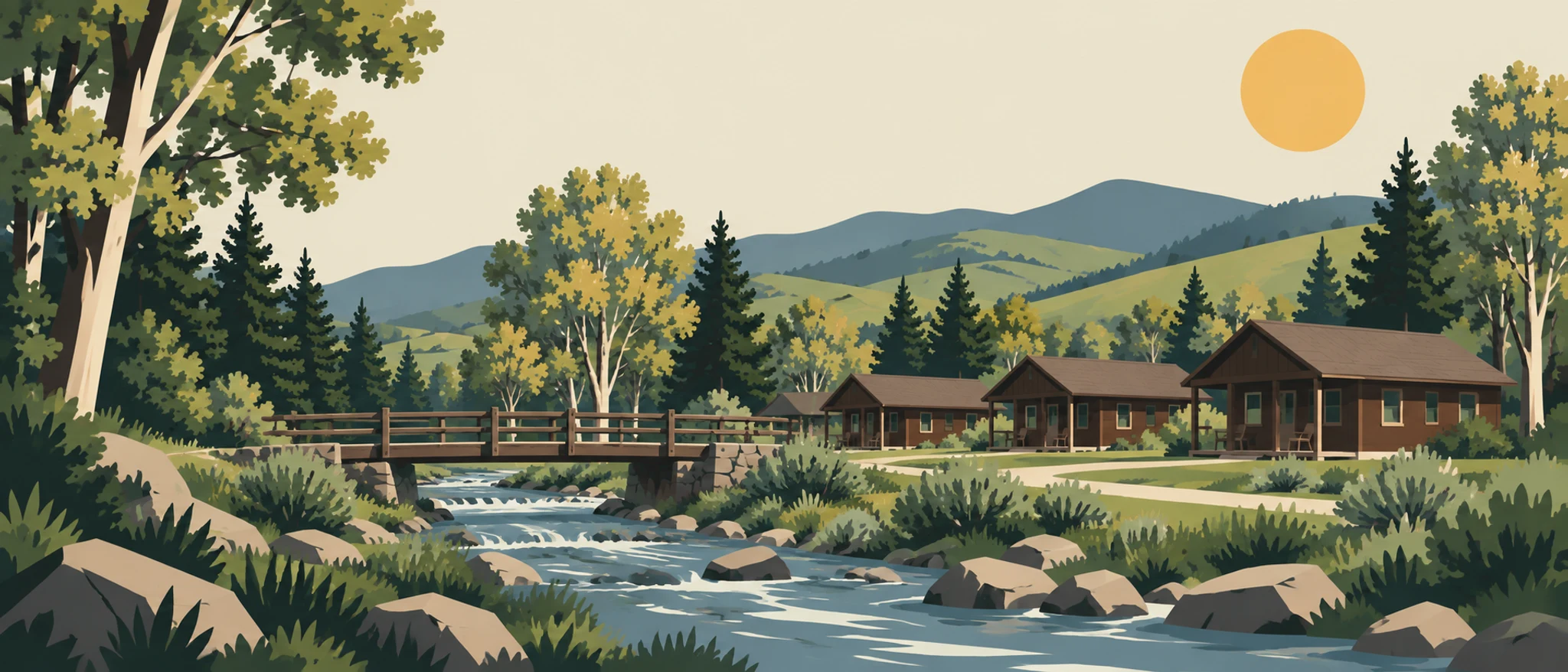
The cabins came later and changed the place. Today there’s a lodge with a kitchen, cabins full of bunks, heated restrooms and showers, an amphitheater built into the hillside, a volleyball court, tetherball, horseshoe pits and a field big enough to lose a flag in. In the summer the creek is the main event — groups float it, and there’s a famous slip-and-slide. In late September the creek is for looking at.
A senior missionary couple lives on site and runs the place. They host dozens of groups a year and they take care of it, so the house rules are simple: quiet hours are real, and the lodge gets left cleaner than we found it.
Porterville, founded by a Davis County bishop
The little community around the camp is Porterville, and it starts with a family from our side of the mountain. Sanford Porter came to Utah in 1847, moved to Centerville in 1849 and became its first bishop when the ward was organized in 1852. His sons started looking east for timber.
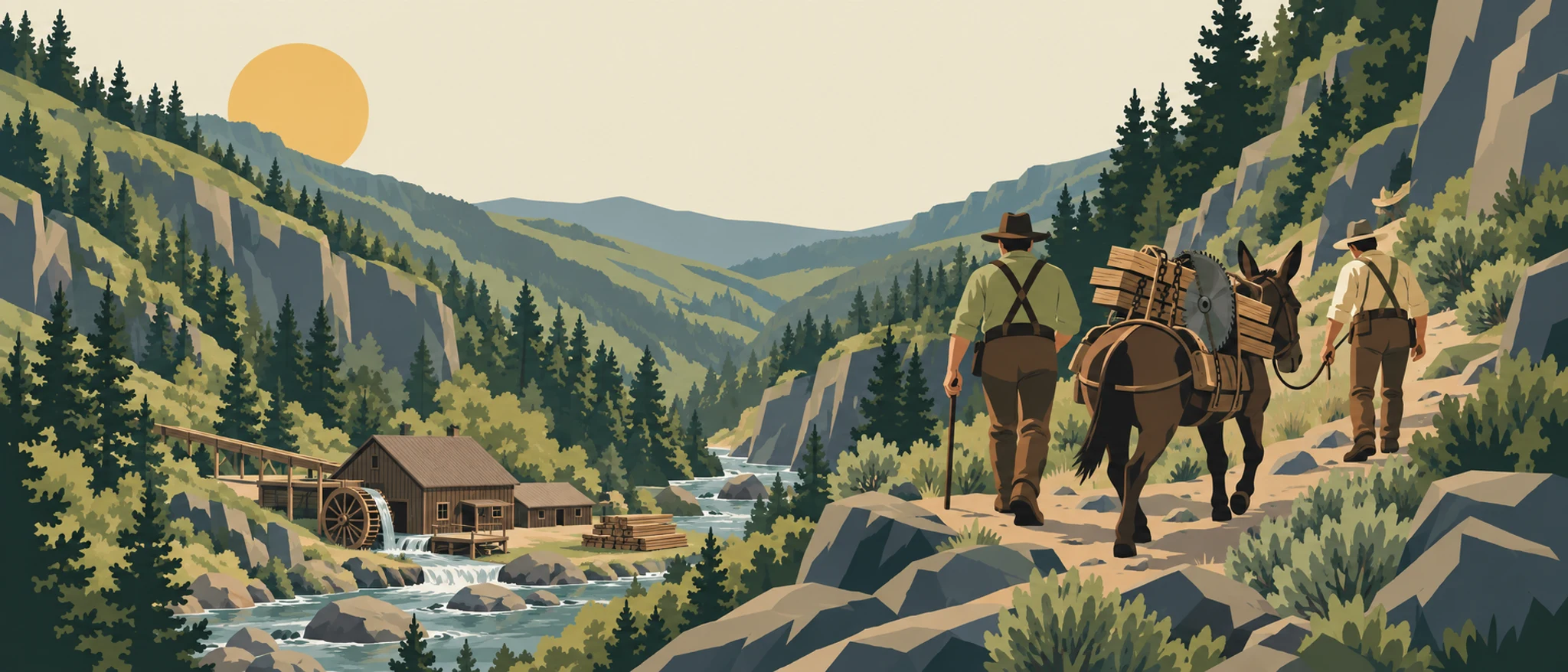
- 1857Sanford Porter Jr., riding as a scout during the Utah War winter, follows a rocky canyon so rough to travel he names it Hardscrabble. It has water and timber — perfect for a mill.
- 1859The family hauls sawmill machinery over the Wasatch by pack mule and builds the first sawmill in what becomes Morgan County. Lumber goes back over the mountain to Centerville.
- 1860Sanford and Nancy Warriner Porter build a cabin on East Canyon Creek and winter there. Over the next two years four sons build log homes and move their families up.
- 1863English converts begin arriving. A branch of the Church is organized the following year.
- 1860sChief Washakie and his band of Shoshone keep returning each fall to hunt, fish, dry meat and pick berries in the valley, as they had long before any mill.
- 1898Porterville builds its church house. President Joseph F. Smith dedicates it in 1908. When the railroad came through Morgan County, the Porter mill cut the ties from Echo to Devil’s Gate.
The creek
East Canyon Creek runs right past the camp on its way north to the Weber River. Follow it upstream, a dozen miles or so, and you’re on the last stretch of the Mormon Pioneer Trail. The Donner-Reed party cut the road down East Canyon in 1846; Brigham Young’s company followed it in July 1847, turned up Little Emigration Canyon, crossed Big Mountain and came out into the Salt Lake Valley.
The water they followed is the same water in front of the lodge. Today a reservoir sits on that upper stretch — the first dam went in during the 1890s and the one there now dates to the 1960s — and East Canyon State Park sits above it, which is why UT‑66 keeps climbing after the camp.
For the kids
Sources: Daughters of Utah Pioneers marker at Porterville (1986); Esshom, Pioneers and Prominent Men of Utah (1913); Utah History Encyclopedia, “Mormon Trail”; public reviews and listings for the camp. Camp construction dates come from family recollections, not records — if you know more, tell us at the fire.